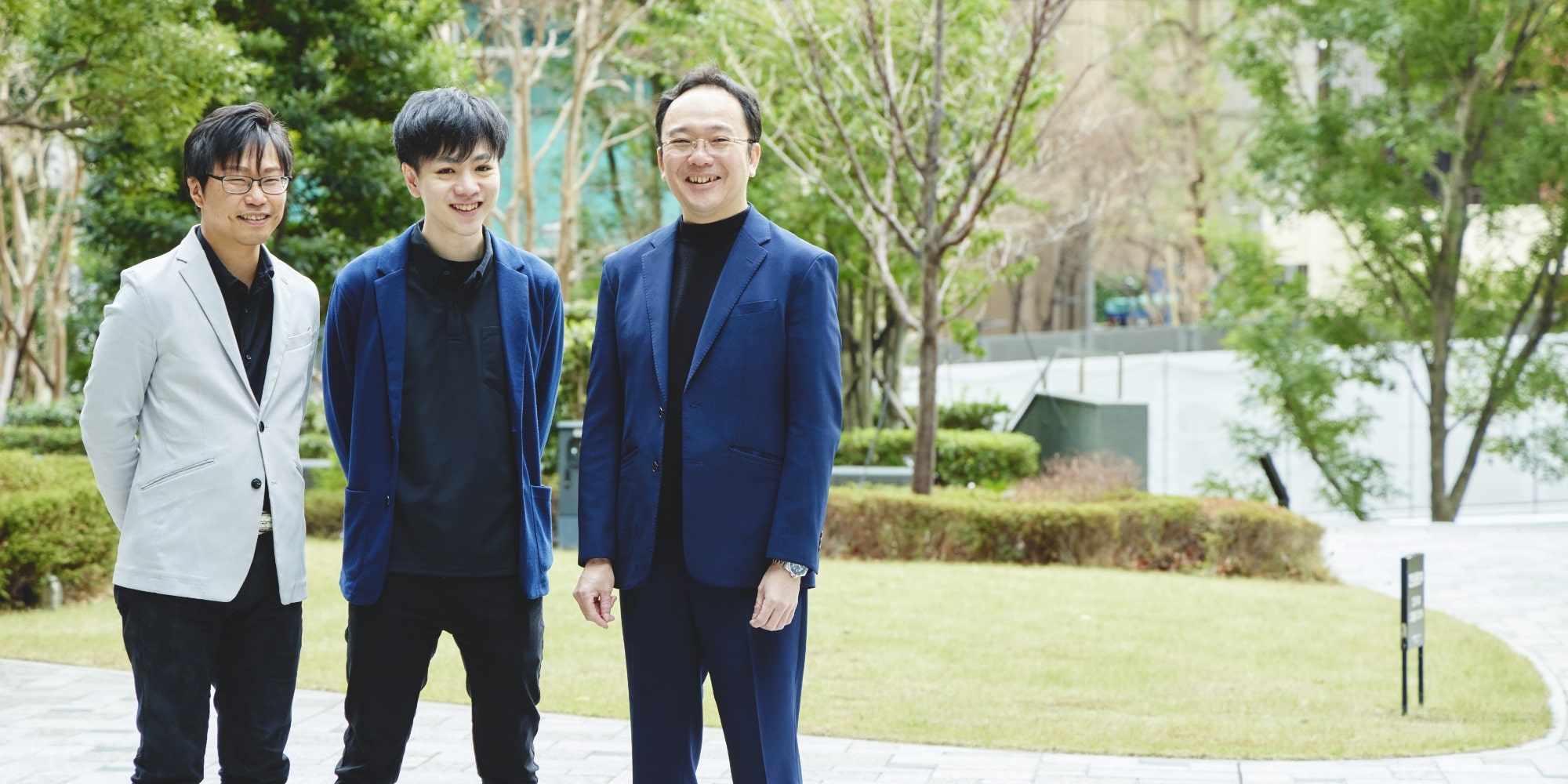
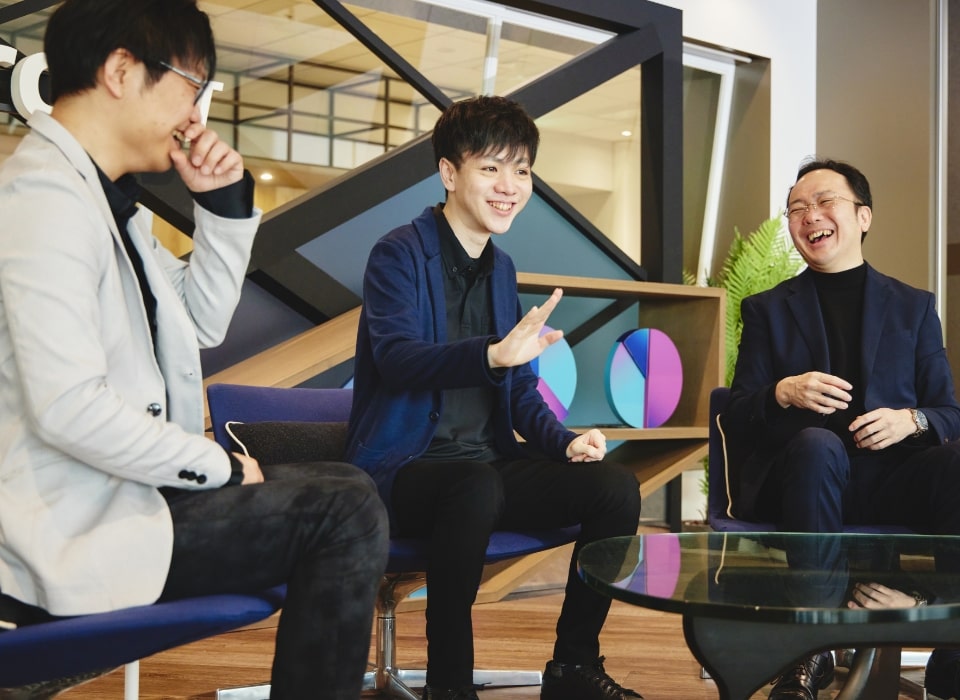
01.Inside the Development of the New MotionBoard

新MotionBoard開発プロジェクト対談

Business Data Empowerment Strategic Business Unit
Customer Experience Division, Customer & Market Knowledge Division Manager
Shinichi Sugiyama
Business Data Empowerment Strategic Business Unit
Deputy General Manager of Business Strategy Division and DE Business Strategy Department
Daigo Kobayashi
Business Data Empowerment Strategic Business Unit
Technology Headquarters, MotionBoard Development Department
Yoshifumi Takeshima

Cocreation with users.
Story of a new product development equipping generative AI functions.

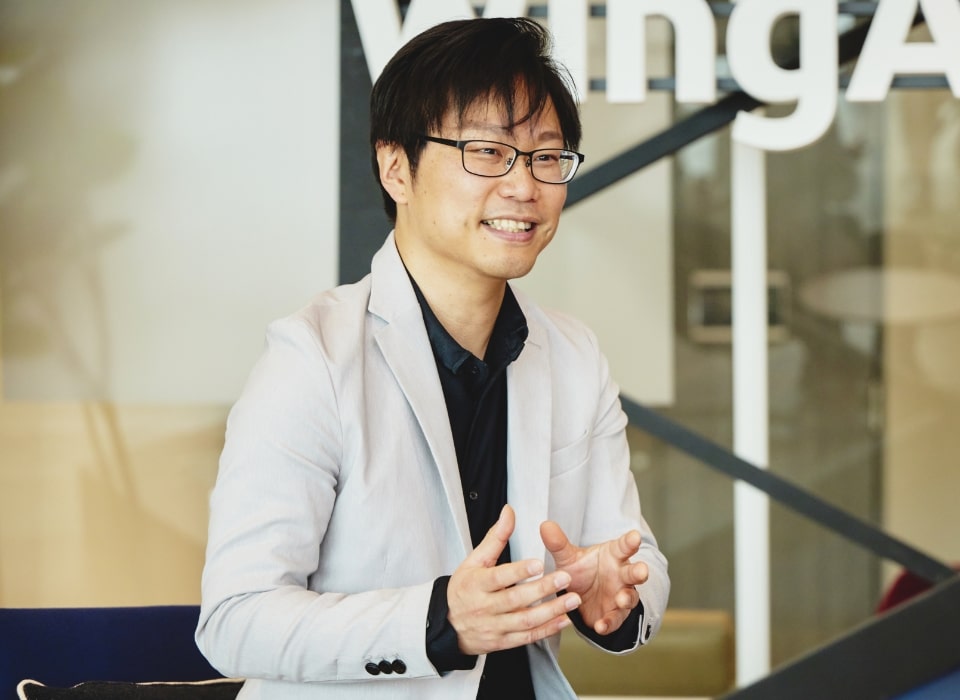
Profile Shinichi Sugiyama
Head of the MotionBoard re:Act user evaluation project. Responsible for planning e-learning and blog content for user evaluation and retention, as well as increasing the number of core users and fans. He is currently based in Hokkaido and works fully remotely.

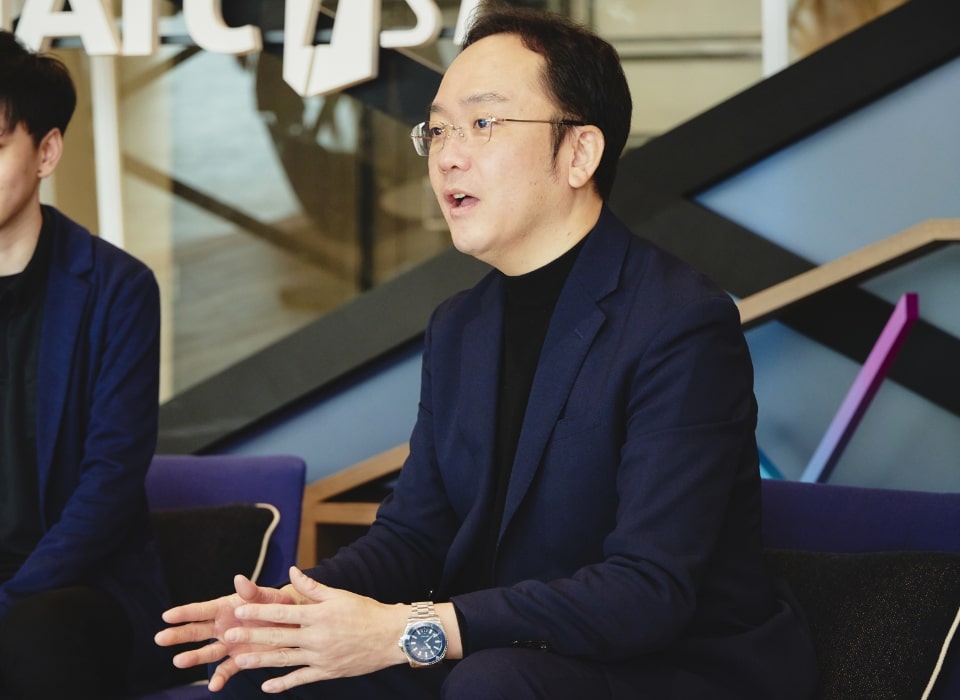
Daigo Kobayashi
In charge of product planning for MotionBoard. In the highly competitive BI tool market, he constantly devises strategies to help MotionBoard thrive. With this updated version, he is eager to enhance the appeal of MotionBoard as a BI tool that can be used in daily business operations.

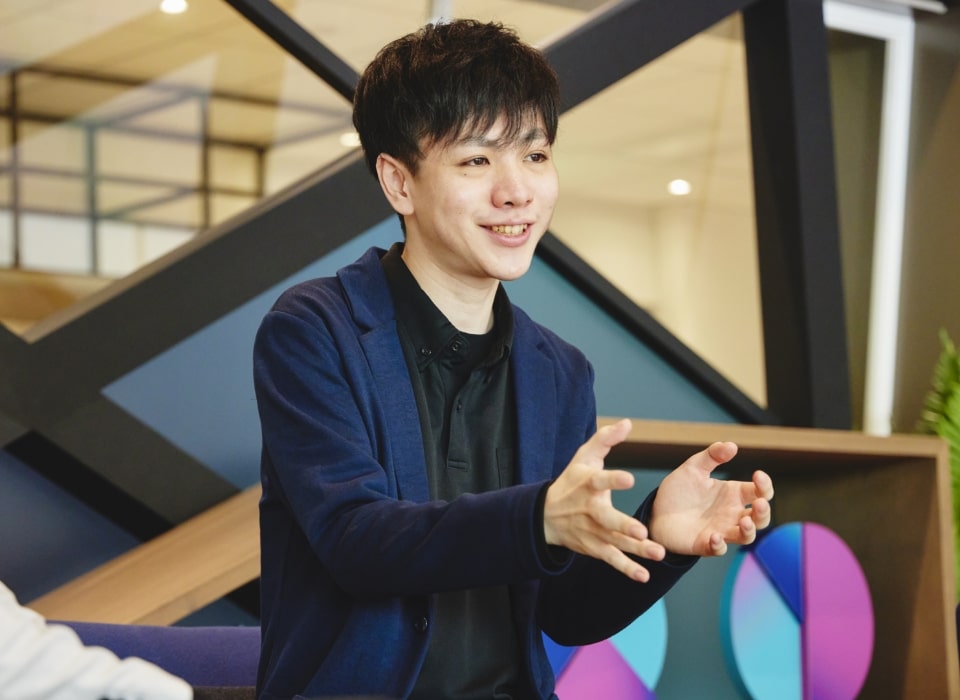
Yoshifumi Takeshima
After joining WingArc1st as a fresh graduate, he was assigned to the Product Development Department and is currently in charge of MotionBoard development. For MotionBoard re:Act, he is focused on refining usability by directly receiving user feedback and is tackling the challenge of adding new functions and developing business applications with good operability.

MotionBoard, a BI tool that has been in use for about 15 years, continues to gain many users. Its updated version, MotionBoard re:Act, will be released at the end of 2025. MotionBoard re:Act has been developed to incorporate generative AI functions and enhance functionality. Here at WingArc1st, we are taking on the challenge of a new development approach: cocreation with users. Currently, this development project has as many as 40 user companies participating. How was this achieved and how is it progressing? We will reveal the details of the MotionBoard re:Act development project through interviews with the team members.

Real sentiments of users are collected through chat.
Towards developing a BI tool that everyone will find easy to use.

――What is the objective of the MotionBoard re:Act development project, which is being carried out in cooperation with users?

Mr. Sugiyama:It's been about 15 years since MotionBoard was released, and we have received many requests for UX/UI improvements. In response to this, we started a project to develop its updated version, MotionBoard re:Act, which will include significant usability improvements and new functions powered by generative AI. To incorporate generative AI functions, we utilized our product "dejiren," an AI platform that uses generative AI behind the scenes of business operations. Through its integration with MotionBoard, dejiren will serve as a virtual assistant that supports business operations, including the automation of various tasks.

Mr. Takeshima:In addition to incorporating generative AI functions, we are also focused on improving usability in MotionBoard re:Act. MotionBoard is a comprehensive multi-functional BI tool that also comes with data input, enabling everything from business application development to data utilization. While typical BI tools are used only a few times a month, a major feature and strength of MotionBoard is that it is used in daily business operations. To maximize this, this latest update not only intends to make MotionBoard easier to use on a day-to-day basis, it also aims to make it easier to create business apps.

Mr. Kobayashi:Actually, many BI tools are made overseas. That is why we wanted to take advantage of the unique strengths of Japanese companies in this project. The challenge was to create something together with the users. Because both developers and users are located in Japan, we took the development approach of having users try out the products in the development stage, receive feedback, and make improvements over time. Our goal is to have a product that is useful immediately upon release. And in addition, deepen engagement with users through product development.

――How exactly did you promote this project?

Mr. Takeshima:First, we developed a preview version of MotionBoard re:Act. Not all features are implemented in the preview version, but it is intended as a prototype for the new product. We then approached MotionBoard's core users, had them try it out, and received their feedback to improve and develop the system.

Mr. Sugiyama:In concrete terms, we reached out to our core users who have been using MotionBoard for many years and asked them to collaborate with us on the development. We gave a preview version to everyone who agreed and held a lecture on how to use it. After that, everyone was free to use it, and we then held a feedback meeting one month later. We received a lot of feedback. After that, we continued the project by notifying users each time we added a new feature or improvement and had them use the preview version freely and contact us whenever they noticed something.

Mr. Takeshima:For communication between users and the development project team, we use our AI platform, dejiren. Since dejiren can also be used as a chat tool, users are free to post on it if they notice something and our development team members will respond. This was a very valuable experience for us, as we usually don't have the opportunity to develop a product while receiving user feedback in real time.

Mr. Kobayashi:dejiren was very useful. Anyone can easily post their opinions, and the content can be shared with everyone, including other users and members of the development and quality assurance teams. This allowed all members involved in the project to work closely with one another and have intensive discussions. Had this been done by email, I believe the development program wouldn't be as fruitful as it is. We are very grateful to have a product like dejiren in our company, and our dejiren representative also readily helped us use it.

More feedback than expected clearly reflected user's expectations and motivated us to develop a product that truly adds value.

――While they are all core users, why do you think as many as 40 companies participated in this development project?

Mr. Sugiyama:I was also surprised that so many participated in this project. While we did have long-standing relationships with them, the customers helped us out with development while doing their own work. We're truly grateful. Actually, we have a user community called "nest" for our product users. Through nest, we have been deepening our everyday communication with customers by sharing information and exchanging questions. These activities have helped us build trust with our customers, and our core users have become fans of our products. I believe it is precisely for these reasons that so many chose to cooperate with us.

――What kind of feedback have you received from users?

Mr. Kobayashi:We received a lot of positive feedback and evaluations from our core users. There were over 140 of them! Some of them were as good as testers in finding bugs, telling us that they weren't able to proceed when they do certain things.

Mr. Sugiyama:What was interesting was that when one user expressed their opinion on dejiren that certain specifications were better in the existing version, other users responded that they thought it was fine as it was, and then the development team members also joined in the discussion. Being able to share thoughts with multiple users was a very meaningful and valuable experience.

Mr. Takeshima:We sometimes received detailed comments, such as telling us that there are a lot of clicks needed for an operation that is often repeated, which can be troublesome. It is precisely because they have used it that they have such opinions. On the development side, we felt the need to fix the problems immediately and tried to respond as quickly as possible.

Mr. Sugiyama:I was also surprised that modifications were quickly made just two weeks after receiving feedback. We also received feedback from users who were familiar with the existing version that the new specifications felt strange to them, but were easier to understand for first-time users. Users themselves asked around for feedback and came up with the best UI for new users, which we really appreciated.

――Given that there was so much feedback, how did you handle it internally?

Mr. Sugiyama:Development team members, including Mr. Takeshima, are continuously responding to posts from dejiren users. We received more feedback than we had imagined, and while that made us happy, we discussed internally how to incorporate each opinion into the product.

Mr. Takeshima:It's really exciting that the developers can carry out their work while listening to user feedback in real time. I feel this marks the arrival of a new era. It makes me happy to hear positive feedback such as those who say that the UI has improved greatly and that they can use the product without looking at the manual. We also view negative feedback as issues to be addressed and improved upon. Until now, we have developed products by imagining how they would be used. But this time, we could ask users directly how they would like to use the product before its release. We can see the direction of development and improvement more clearly and tackle development with confidence.

Mr. Kobayashi:The other day we received feedback from someone who said they thought it would be difficult to use the function to create business applications since they were not an engineer, but they were able to do it. Hearing this made me very happy, even though I am not in charge of development.

Mr. Takeshima:That's great! However, for users accustomed to using the existing product, the new specifications are inevitably difficult to use. Nevertheless, we want to create something that will definitely be easy to use once you become familiar with it by taking users' opinions into account.

Product development carried out together with users, made possible by a deep relationship of trust.

――What do you think are the advantages of carrying out product development together with users?

Mr. Takeshima:A major advantage of this method is that it can help us understand the essence of issues and solve them based on user requests. Until now, we've mostly heard user requests bit by bit through their superiors or sales partners. With this method, it's difficult to fully understand the reasons behind user requests and what they are having trouble with, making it hard to decide if we should support it as part of development. This time we were able to accurately receive user requests and reflect them in the development process, so we can aim to make the product easier for everyone to use.

Mr. Kobayashi:Another major advantage is that we can address all possible modifications before release. Post-release modifications can take as long as six months for a simple fix, as it may impact many areas. Since it was pre-release, we felt were able to make modifications immediately and aim to make it more functional.

Mr. Sugiyama:To ensure that users will continue to use the product, the most important thing is that the product itself is easy to use. We feel that being able to make minor improvements in UI/UX and the number of clicks for operations prior to release will contribute significantly to retention of use and lower cancellation rates.

――Looking back on what's happened so far, what factors do you think helped the steady execution of this development project?

Mr. Sugiyama:Behind this project are the technical capabilities and stamina of the development team members, the trust of users, and our own product, dejiren. Having these three elements made it possible to carry out the development process with users. That is, I once again feel that this development process could only be done by WingArc1st.

Mr. Kobayashi:This project truly embodies WingArc1st's core value, Build the Trust. Thanks to the trust we have from our users, we were able to get their cooperation and provide them with products that meet their expectations. This project is built on trust.
This relationship founded on trust is also the result of our company's focus on relationships between people. After all, products are only tools and users need communication and support to master them. That is why we have always placed importance on the connections between users and WingArc1st employees, the connections between people, rather than those between our products and users. We were able to reaffirm that this approach has built a relationship of trust.

――Lastly, please tell us what you are excited for leading up to the release.

Mr. Takeshima:Through this project, we realized just how much users expect from our products. When people have no expectations for a product, it's all over. We will strive to live up to their expectations and to have the users who cooperated with us tell us that MotionBoard has improved.

Mr. Kobayashi:For this release, I'm also preparing to show you how to utilize the newly added generative AI and application creation functions. Our goal is to not just add new functions, but to have them contribute to users' business results. We've already started receiving ideas on usage from users, so please look forward to our suggestions on how to utilize the product.

Mr. Sugiyama:MotionBoard re:Act is scheduled for release at the end of 2025 (plan as of May 2025).
All of us here at WingArc1st are committed to making customers happy with this product. We want to contribute to the success of your business. As has been WingArc1st's practice in the past, with MotionBoard re:Act, we have carried out development in our distinct way, with people, products, contents, and services all focused on the user. We hope you look forward to its release.

02.Business Document Division BD Business Strategy Divisions

Employee Interview

Business Document Division
BD Business Strategy Division
Ryo Shinomiya

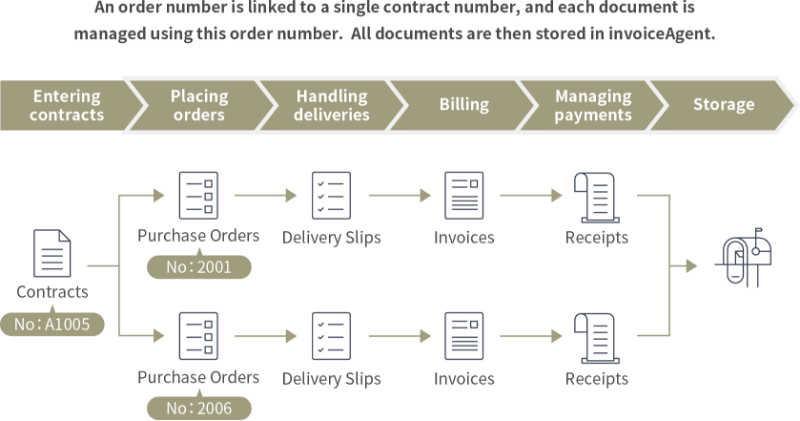
invoiceAgent is a solution that fully digitizes B2B transactions. Through this solution, WingArc1st will drive the inter-company DX of our customers and their partners.

Profile Mr. Shinomiya joined WingArc1st as a new graduate in 2016. He was in charge of partner sales in the Kansai region for around five years. He built his expertise by proposing solutions that combine the functions of various products. In FY2021 he took charge of business strategies related to Business Document Solutions. Currently, he is mainly promoting the company's latest product, invoiceAgent.

The source of WingArc1st's growth is the innovative products and services it develops in-house. Among these products, there are high expectations for invoiceAgent, released in 2021, to become a new key product for WingArc1st. To help you better understand the characteristics and growth strategy of invoiceAgent, we have prepared an interview with Mr. Ryo Shinomiya, who is in charge of Business Strategy.

more